Spring Crappie Fishing: The Complete Guide
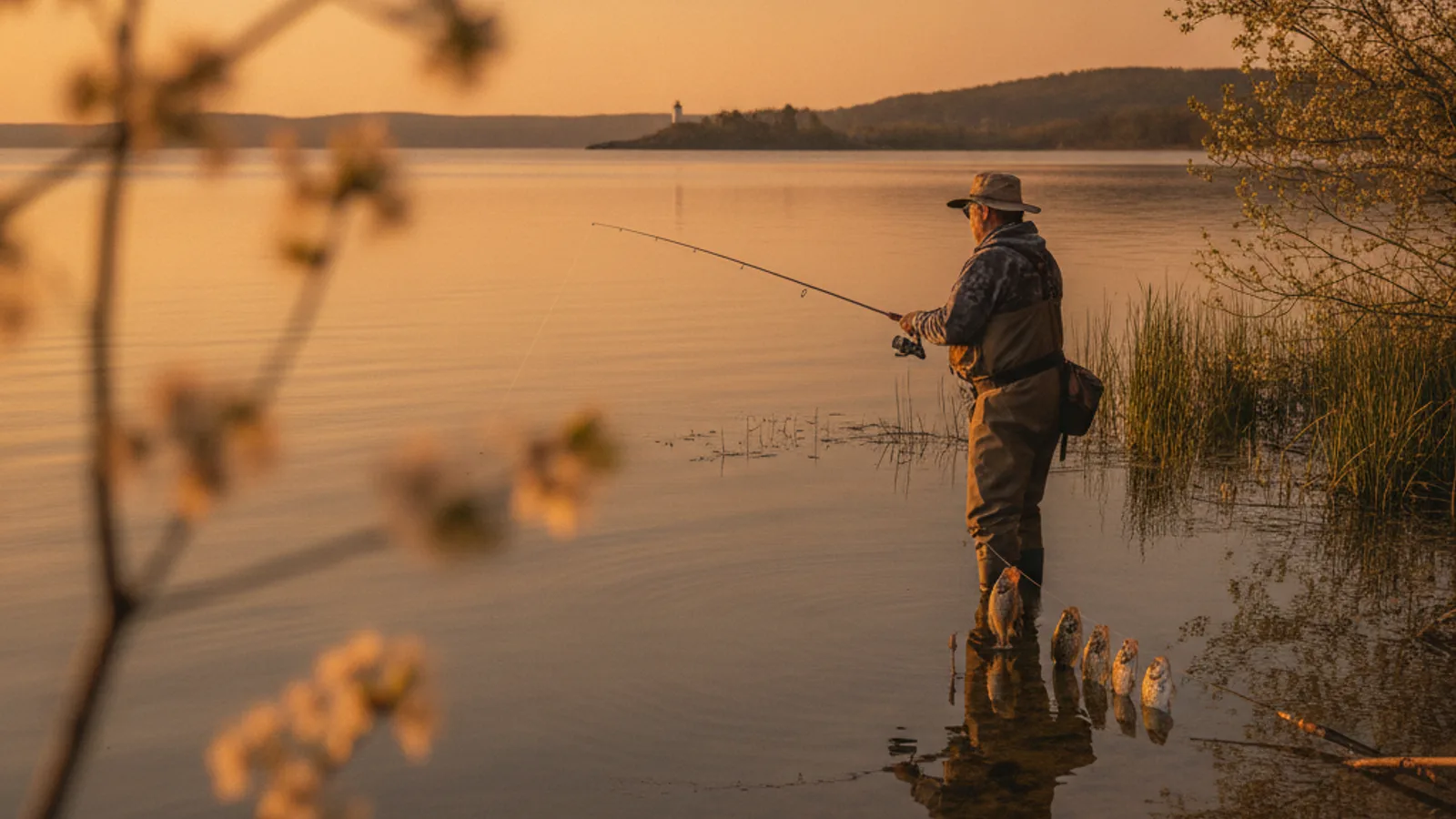
Spring crappie fishing is the easiest, most productive fishing many anglers experience all year. When water temps climb into the mid-50s, crappie abandon deep winter haunts and flood into the shallows in massive numbers. You don't need a boat, expensive gear, or years of experience, just the right timing and a few simple techniques.
Understanding the Spring Crappie Timeline
Spring crappie behavior follows water temperature like clockwork. Forget the calendar, buy a $10 water thermometer and let it guide your decisions.
Pre-Spawn Staging (48-55°F)
Crappie start moving from deep winter areas toward shallower water. They gather on secondary structure, brush piles, standing timber, and channel bends in 8-15 feet of water. They're feeding actively but haven't committed to the shallows yet.
- Where to find them: Deeper brush piles, creek channel bends, secondary points near spawning flats
- Technique: Vertical jigging or slow-trolling with 1/16-1/8oz jigs, or slip bobber with minnow set at the right depth
- Key detail: Use your electronics (fish finder) to locate schools suspended near structure in 10-15ft
Active Pre-Spawn (55-60°F)
This is when it gets good. Crappie are moving shallow, from 15ft down to 5-8ft, and staging on the nearest cover to spawning areas. They're aggressive and feeding heavily to build energy for the spawn.
- Where to find them: Shallow brush piles, fallen trees, dock pilings, standing timber in 4-8ft
- Technique: Slip bobber with jig or minnow, casting small jigs to visible cover
- Key detail: Males move in first (they're darker colored) to prepare spawning sites
Spawning (56-64°F)
This is peak crappie season. They're in 1-5 feet of water, concentrated on brush, stake beds, fallen trees, and any other shallow cover. You can catch 50+ fish in a few hours when you find a school.
- Where to find them: Any shallow cover, brush piles, laydowns, stake beds, overhanging trees, boat docks in 1-5ft
- Technique: Small jigs under a bobber, tight to cover. Drop straight down next to wood. Minnows under a bobber.
- Key detail: The spawn doesn't happen all at once. Different parts of the lake warm at different rates, so the spawn can last 3-4 weeks
Post-Spawn (64-70°F+)
Crappie gradually pull off the banks and return to deeper structure. Fish suspend over brush piles in 8-15ft, near bridge pilings, and along channel ledges. The bite slows compared to the spawn, but spider rigging and vertical jigging still produce.
Pro Tip: The north shore of a lake warms first, it gets more direct sunlight. In early spring, focus all your effort on north-facing shorelines. You might find spawning crappie there 2-3 weeks before the rest of the lake.
Best Jigs for Spring Crappie
Jigs are the #1 crappie lure, period. A 1/16oz jig head with a soft plastic body catches more crappie than anything else. Here's what you need:
Jig Heads
- 1/32oz: Very shallow water (1-3ft), calm conditions, ultralight line
- 1/16oz: The universal crappie weight. Works in 2-8ft for most situations
- 1/8oz: Deeper water (8-15ft), windy conditions, or when you need to get down fast
- Hook size: #4 or #2 Aberdeen-style hooks, thin wire for easy penetration and less damage to live minnows
Best Soft Plastic Bodies
- Tube jigs: 1.5-2" tubes in chartreuse, white, and pink. The classic crappie bait
- Curly-tail grubs: 2" grubs in chartreuse/white, pink/white, and pearl. Good action and vibration
- Paddle-tail swimbaits: Bobby Garland Baby Shad, Midsouth Tackle Tiny Shad. Natural swimming action
- Hair jigs and marabou: Hand-tied jigs with natural feather action. Incredible in cold water when crappie want slow presentations
Best Colors by Water Clarity
- Clear water: Natural colors, pearl, ghost minnow, smoke, silver glitter
- Stained water: Chartreuse, white, pink, orange, anything visible
- Muddy water: Bright chartreuse, hot pink, orange, or black/chartreuse combos
Best Rigs for Spring Crappie
Slip Bobber Rig (Best Overall)
The slip bobber is the single most effective crappie rig. It lets you set the exact depth and keep your bait in the strike zone, whether that's 2ft or 15ft.
- Thread a bobber stop onto your line at the desired depth
- Add a small bead, then slide on the slip bobber
- Add a small split shot 12-18 inches above the hook
- Tie on a 1/16oz jig head and add a soft plastic body or live minnow
- Cast to cover and wait, when the bobber goes under, set the hook with a smooth sweep
Tight-Line Jigging (Brush Piles and Timber)
For vertical fishing around brush and standing timber. Drop the jig straight down, work it through the branches, and feel for the subtle "tick" of a crappie bite.
- Use a 10-12ft crappie pole or ultralight rod
- 4-6lb line, 1/16-1/8oz jig
- Lower the jig to the depth of the brush, then slowly lift and drop 6-12 inches
- Crappie bites are light, watch the line for any movement or slack
Casting Small Jigs (Bank Fishing)
Perfect for bank anglers. Cast a 1/16oz jig past visible cover (fallen trees, dock pilings, overhanging branches) and slow-retrieve it back through the strike zone. Count it down to different depths until you find where crappie are holding.
Live Minnows
When crappie are finicky, live minnows are the backup plan that always works. Hook a fathead minnow through the back (just behind the dorsal fin) on a #4 Aberdeen hook under a slip bobber. Set the depth to keep the minnow 12-18 inches above the bottom near cover.
Minnow vs. Jig: In water below 55°F, minnows often outperform jigs because crappie want a slower, more natural presentation. Above 55°F, jigs with soft plastic bodies are typically more efficient, you can cover more water and catch more fish per hour.
Where to Find Spring Crappie
Brush Piles
Crappie and brush piles go together like peanut butter and jelly. Submerged brush piles in 2-8ft of water during the spawn are crappie magnets. Many lakes have brush piles placed by state agencies or fishing clubs, check with your local DNR for GPS coordinates.
Fallen Trees and Laydowns
Any tree that has fallen into the water and extends from the bank toward deeper water holds crappie in spring. Focus on the deeper end of the laydown during pre-spawn, then the shallow end (near the root ball) during the spawn.
Boat Docks
Docks provide shade and structure. Crappie stack under docks, especially those with brush or pilings. Skip jigs under the dock with a sidearm cast or lower a slip bobber rig along the pilings.
Bridge Pilings and Riprap
Bridge pilings create current breaks and ambush points. Riprap (rock banks) warm quickly and attract baitfish. Both are reliable spring crappie spots.
Stake Beds
In many southern lakes, anglers and agencies install stake beds, bundles of PVC stakes or wooden stakes driven into the bottom. These are crappie condos during the spawn. Check fishing forums for stake bed GPS locations on your lake.
Use depth maps to find these spots → | Finding fish on structure →
Essential Spring Crappie Gear
- Rod: Ultralight or light spinning rod, 6-7ft. A sensitive tip is critical for detecting light bites. Longer rods (10-12ft crappie poles) for vertical jigging around brush
- Reel: 1000-2000 size spinning reel with smooth drag
- Line: 4-6lb monofilament or 4lb hi-vis line (easier to detect bites by watching line movement)
- Bobbers: Slip bobbers (round or pencil-style), bobber stops, and small beads
- Jigs: 1/16oz and 1/32oz jig heads, assorted tube and grub bodies in chartreuse, white, pink
- Minnows: Fathead minnows (1.5-2") as backup bait
- Net: Crappie have paper-thin mouths, always net them to avoid tearoffs
- Thermometer: Digital water thermometer to track the spawn progression
Top Spring Crappie Lakes by Region
South
- Grenada Lake, Mississippi: One of the best crappie lakes in America. Fish the standing timber in March-April
- Weiss Lake, Alabama: The "crappie capital of the world." Spawn peaks in March
- Kentucky Lake/Barkley, TN/KY: Spider rigging over brush piles produces limits of slabs. More top lakes →
Midwest
- Table Rock Lake, Missouri: Clear water sight fishing for crappie on brush in April-May
- Lake of the Ozarks, Missouri: Deep brush piles and dock fishing produce big slabs
- Patoka Lake, Indiana: Excellent spring crappie in standing timber and brush piles. Indiana lakes guide →
North
- Lake Erie (Western Basin), Ohio: Massive crappie numbers around weed edges and breakwalls. Cleveland fishing spots →
- Mille Lacs Lake, Minnesota: Crappie move shallow in May-June as ice finally retreats
- Lake St. Clair, Michigan: Canal systems and marinas hold spawning crappie in late April-May
Check Spring Conditions at Your Crappie Lake
Weather, solunar periods, and barometric pressure to time your spring crappie trips.
Check fishing conditions →Frequently Asked Questions
When do crappie start spawning?
Crappie spawn when water temperature reaches 56-64°F. In the Deep South, this can be as early as late February. In the Midwest, April-May is typical. In the far North, May-June. Use a water thermometer, it's more reliable than the calendar. Water temp guide →
What is the best crappie bait for spring?
A 1/16oz jig with a 2" tube or curly-tail grub in chartreuse or white is the most versatile option. In cold water (below 55°F) or when crappie are finicky, live minnows under a slip bobber are hard to beat. Full crappie tips →
How deep are crappie in spring?
It changes week to week. Pre-spawn (48-55°F): 10-15ft on deeper structure. Active pre-spawn (55-60°F): 4-8ft near cover. Spawning (56-64°F): 1-5ft, right against shallow brush and wood. Post-spawn (64°F+): they pull back to 8-15ft.
Can I catch crappie from the bank in spring?
Yes, spring is the best time for bank fishing crappie because they're in shallow water near the shore. Look for fallen trees, overhanging branches, docks, and any structure in 1-5ft of water. Cast small jigs or float minnows under a bobber right up against the cover. Kid-friendly spots →
What size crappie should I keep?
Most states have a minimum size (usually 9-10 inches) and a daily limit (typically 15-25 fish). Crappie over 12 inches are considered "slabs." Keeping fish in the 10-12 inch range and releasing the biggest spawners helps maintain the population. Always check your state's regulations. Catch and release best practices →
FISH SMARTER ⚓
FIND YOUR SPOT →