Top 10 Spring Bass Fishing Tips 2026
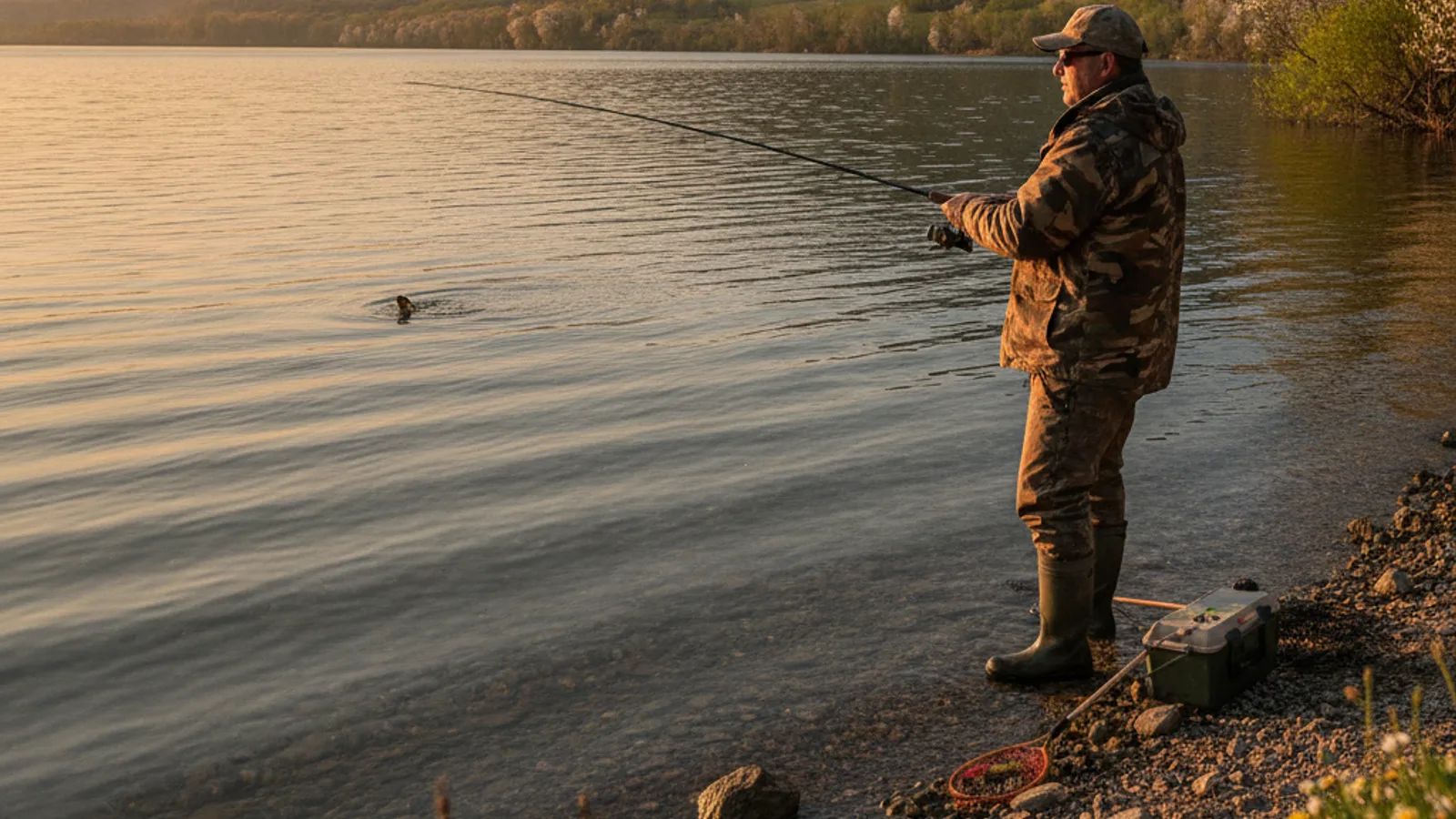
Spring is when the biggest bass of the year get caught. The pre-spawn feed-up, the spawn, and the post-spawn transition create three distinct windows where different tactics dominate. Here are 10 tips that actually make a difference, not generic advice, but the specific adjustments that separate a good spring from a great one.
1. Let Water Temperature Guide Everything
Forget the date on the calendar. Water temperature is the single most reliable predictor of where bass are and what they're doing. Buy a digital thermometer and check it every trip.
- 45-50°F: Bass are lethargic, still in deeper winter haunts. Slow-rolled jerkbaits and blade baits
- 50-55°F: Pre-spawn staging begins. Fish move to secondary points and channel bends near spawning flats
- 55-62°F: Active pre-spawn, the trophy window. Bass are gorging on crawfish and shad
- 62-68°F: Spawning. Bass are on beds in 1-4ft of water
- 68-75°F: Post-spawn recovery, then aggressive feeding resumes
Pro Tip: The north and northwest banks of a lake warm first because they get more direct sunlight. Start your spring trips there, you can find fish 5-10 degrees ahead of the rest of the lake. Use depth maps to find these banks →
2. Master the Pre-Spawn Jerkbait
The jerkbait is the #1 pre-spawn bass lure for a reason: it perfectly imitates a dying shad in cold water. The key is the pause.
- 45-50°F water: Twitch-twitch, then pause 5-8 seconds. The long pause triggers strikes from lethargic fish
- 50-58°F water: Twitch-twitch-pause 3-5 seconds. Fish are more willing to chase
- 58°F+: Aggressive cadence, twitch-twitch-twitch, pause 1-2 seconds
Best jerkbaits: Megabass Vision 110 (suspending), Rapala X-Rap, Lucky Craft Pointer. Choose shad colors (ghost minnow, sexy shad) for clear water, chartreuse/black for stained.
3. Fish the Lipless Crankbait Through Grass
When water temps hit 50-60°F and bass are staging near emerging vegetation, nothing beats a lipless crankbait ripped through grass. The yo-yo retrieve, rip it free of grass, let it flutter down, triggers reaction strikes from pre-spawn bass.
- Best models: Strike King Red Eye Shad (1/2oz), Rat-L-Trap, Booyah One Knocker
- Best colors: Crawfish pattern for dirty water, chrome/blue for clear
- Where: Grass flats adjacent to spawning areas, shallow points with scattered vegetation
4. Target Staging Areas, Not Spawning Flats
Most anglers rush straight to the shallows in spring. The biggest bass are caught in staging areas, the transitional spots between deep winter haunts and shallow spawning flats.
Key staging structure to target:
- Secondary points: The first point inside a spawning pocket or cove
- Channel bends: Where the creek or river channel swings close to a flat
- Rock transitions: Where chunk rock changes to gravel or sand near flats
- Docks on channel: Boat docks that sit over or near the channel provide shade and staging areas
Learn to find staging areas on depth maps →
5. Downsize After Cold Fronts
Spring cold fronts are the biggest buzzkill in bass fishing. A front passes, the sky turns bluebird, and the bite dies. Don't go home, downsize.
- Switch from 1/2oz jigs to 3/16oz finesse jigs
- Drop from moving baits to a Ned rig or shaky head
- Use lighter line (8lb fluorocarbon instead of 12-15lb)
- Slow your presentation by 50%, let baits sit longer
The fish are still there, they just need a subtler approach. Understanding barometric pressure →
6. Sight Fish Beds With Polarized Glasses
In clear water, you can see bass on beds from 62-68°F. Good polarized sunglasses are non-negotiable. Copper or amber lenses cut glare best for shallow sight fishing.
How to fish beds:
- Spot the bed from a distance, look for light circles on the bottom (cleared substrate)
- Identify if the bass is male (smaller, darker) or female (larger, lighter)
- Cast past the bed and slowly drag a Texas-rigged creature bait onto it
- The bass will pick up the bait to move it, that's your bite. Set the hook
- If you catch a bedding fish, release it quickly on the bed so it returns to guard eggs
7. Throw Crawfish Colors When Water Is Below 60°F
In early spring, crawfish are the primary forage for bass. They're coming out of dormancy, slow-moving, and easy prey. Match the hatch with crawfish-pattern lures:
- Jigs: Brown/orange or green pumpkin with orange-tipped trailers
- Crankbaits: Squarebills in crawfish pattern (Strike King KVD 1.5)
- Soft plastics: Crawfish imitators (Zoom Brush Hog, Rage Craw) on Texas or Carolina rigs
Once water passes 60°F and shad become more active, transition to shad-colored moving baits (white, silver, chartreuse).
8. Fish the Post-Spawn Topwater Window
The 1-2 week window after bass finish spawning produces some of the most exciting fishing of the year. Post-spawn bass are aggressive, territorial, and willing to crush topwater lures.
- Buzzbaits: White or chartreuse, steady retrieve over shallow flats at dawn
- Whopper Plopper: 90 or 110 size, bone or loon color, steady retrieve with occasional pauses
- Walking baits: Zara Spook or Heddon Super Spook Jr. in shad pattern, walk-the-dog over points and grass edges
- Frogs: Hollow-body frogs over matted vegetation, lily pads, and emergent grass
Prime window: First light to about 9 AM, and again the last hour before dark. More on timing →
9. Use Lake Maps to Pattern Spring Bass
Spring bass are the most predictable bass of the year because their movements follow water temperature and spawning instinct. A depth map shows you exactly where they'll be at each stage:
- Pre-spawn: Look for channel bends and points near large flats, these are staging areas
- Spawn: Find protected pockets and coves with hard bottom in 1-4ft
- Post-spawn: Main lake points, first break lines, and offshore structure near spawning areas
How to read lake depth maps → | Finding fish with structure →
10. Don't Overlook Ponds
Small ponds and farm ponds warm faster than big lakes, which means spring patterns develop 1-3 weeks earlier in ponds. While lake anglers are waiting for water to warm, pond bass are already in full pre-spawn mode.
- Wacky-rigged Senko (green pumpkin) around any visible cover
- Small spinnerbait (1/4oz white) along banks with overhanging trees
- Ned rig along the dam and deeper areas of the pond
Full pond fishing bait guide →
As an Amazon Associate Fishn Buddy earns from qualifying purchases. Links below help support our work at no cost to you.
Spring Bass Gear Worth Having
- Suspending jerkbait (Rapala X-Rap / Megabass Vision 110), The #1 pre-spawn lure. Twitch-twitch-pause in 45–62°F water. Shad colors (ghost minnow, sexy shad) for clear water.
- Lipless crankbait (Strike King Red Eye Shad 1/2 oz), Rip it through emerging grass for reaction strikes in 50–60°F water. Red craw and chrome/blue are top spring colors.
- Whopper Plopper 90 topwater, Post-spawn topwater gold. Steady retrieve over flats at dawn after water hits 68°F. Bone and loon are proven colors.
- Ned rig kit (TRD worms + mushroom heads), Post-cold-front finesse that catches bass when nothing else will. 1/10 oz jighead, 2.75″ Z-Man TRD in green pumpkin.
- Polarized sunglasses (amber/copper lens), Non-negotiable for sight fishing beds at 62–68°F. Amber and copper lenses cut glare better than grey for shallow water.
- Digital water thermometer, Water temp drives every spring bass decision. A $12 thermometer pays for itself the first day you use it to find the warm side of the lake.
- Medium-heavy baitcaster (7 ft fast action), For jigs, Texas rigs, and topwater. Pairs with 12–15 lb fluorocarbon for pre-spawn and spawn fishing.
For complete rod and reel setups by technique, see our Best Fishing Rod & Reel Combos 2026 guide.
Track Spring Conditions at Your Lake
Check weather, solunar periods, and barometric pressure before your next trip.
Check conditions at your lake →Frequently Asked Questions
What is the best spring bass lure?
It depends on the phase. Pre-spawn: jerkbaits and lipless crankbaits. Spawn: Texas-rigged creature baits and jigs. Post-spawn: topwater (buzzbaits, Whopper Ploppers) and swimbaits. If you can only bring one lure, bring a jerkbait, it catches bass from 45°F all the way through the spawn.
What water temperature do bass spawn at?
Largemouth bass typically spawn when water temperatures reach 62-68°F. Smallmouth bass spawn slightly cooler, around 58-65°F. Males move up first to build beds, followed by larger females. The spawn can last 2-4 weeks across a lake as different areas warm at different rates.
Is morning or afternoon better for spring bass?
In early spring (water below 55°F), afternoon is often better because the water has warmed a few degrees. Once water is consistently above 60°F, early morning becomes the prime window, especially for topwater. Complete timing guide →
Where do bass go after they spawn?
Immediately post-spawn, bass often suspend near the first breakline or piece of structure adjacent to spawning flats. Males may guard fry for a few days. Within 1-2 weeks, both sexes recover and move to summer-pattern structure, main lake points, ledges, deep grass edges, and offshore humps.
FISH SMARTER ⚓
FIND YOUR SPOT →