How Moon Phases Affect Fishing: Solunar Theory Guide
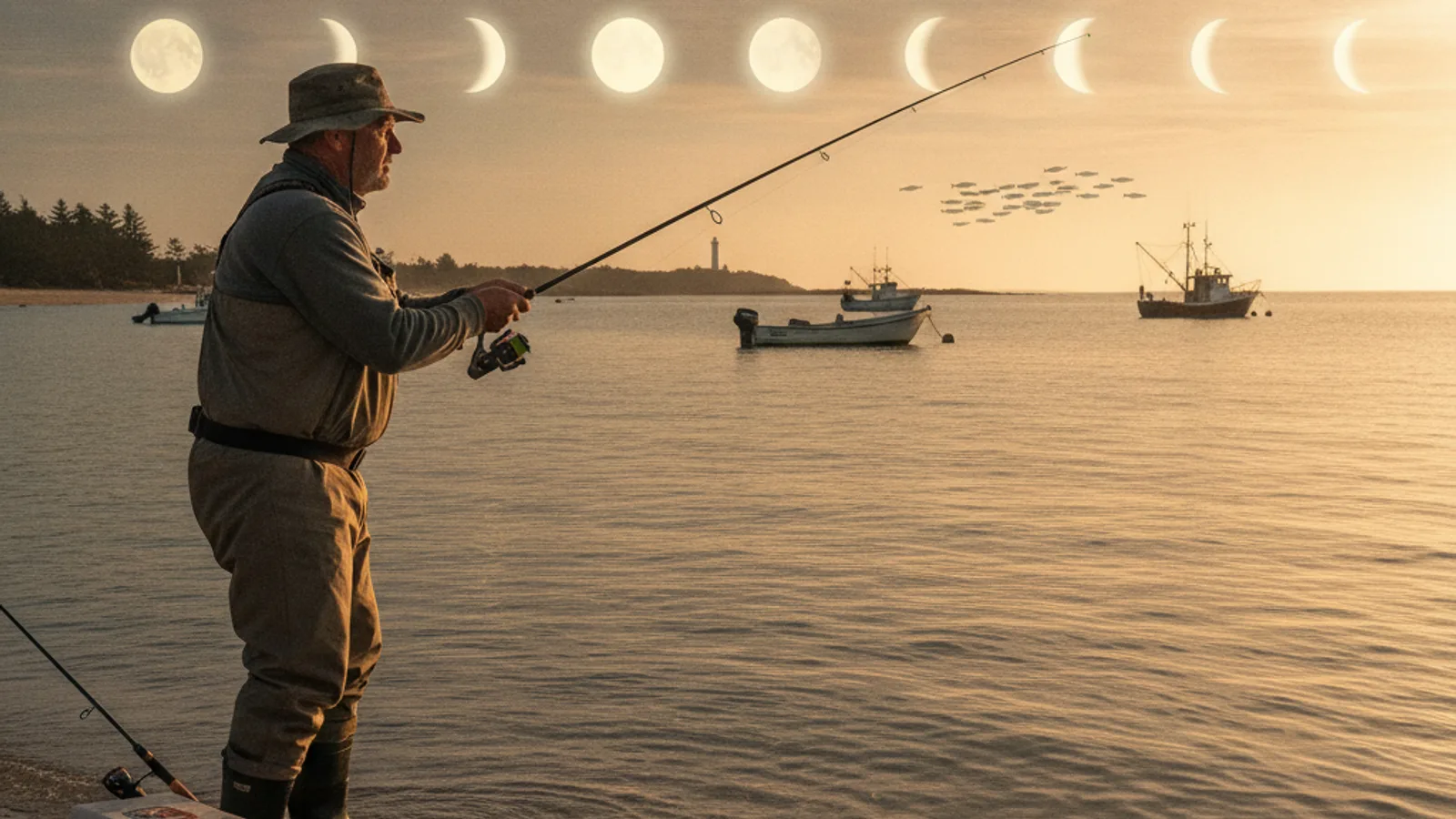
Anglers have been fishing by the moon for centuries, and modern science is catching up to what old-timers always knew, the moon genuinely affects fish behavior. From tidal movements to feeding patterns, lunar cycles play a measurable role in when and how actively fish feed. Here's your complete guide to fishing by moon phases and solunar theory.
The Science Behind Moon and Fishing
The moon affects fishing through two primary mechanisms:
1. Gravitational Pull (Tides): The moon's gravity is the primary force behind ocean tides. Different moon phases create different tidal patterns, stronger tides during new and full moons (spring tides), weaker tides during quarter moons (neap tides). In saltwater, tidal movement directly drives fish feeding.
2. Light Levels: The amount of moonlight varies dramatically through the lunar cycle. Bright full moon nights allow nocturnal predators to hunt effectively, while dark new moon nights push feeding activity toward dawn and dusk. Light levels affect both freshwater and saltwater fishing.
Solunar Theory Explained
Solunar theory was formalized by John Alden Knight in 1926, though the concepts are ancient. Knight proposed that fish and wildlife activity peaks during specific daily periods related to the moon and sun's position relative to your location.
Major Periods (2 Hours Each)
These occur when the moon is directly overhead (moon transit) or directly below your location (moon underfoot). Major periods typically last about 2 hours and represent the strongest predicted feeding windows. Fish, deer, and other wildlife tend to be most active during these periods.
Minor Periods (1 Hour Each)
These occur at moonrise and moonset. Minor periods last about 1 hour and represent secondary feeding windows. While not as strong as major periods, they still produce above-average activity, especially when they coincide with dawn or dusk.
The Power Combo: The absolute best fishing occurs when a major solunar period coincides with a moving tide during low-light conditions (dawn/dusk). When all three factors align, expect exceptional fishing. Use Fishn Buddy to find these overlaps at your location.
Fishing Each Moon Phase
New Moon
Rating: Excellent
The new moon produces the strongest spring tides alongside the full moon. With no moonlight at night, fish concentrate their feeding during dawn and dusk, making daytime fishing particularly productive. New moon periods are excellent for both saltwater and freshwater fishing.
Strategy: Focus on early morning and late afternoon. Fish the moving tide during these periods. Topwater lures and active presentations work well since fish are actively hunting.
First Quarter
Rating: Fair to Good
Neap tides mean less water movement and generally less aggressive feeding. However, the moderate moonlight provides some nighttime visibility without being as bright as a full moon. This can create decent twilight fishing windows.
Strategy: Focus on structure and cover where fish concentrate. Slow presentations and live bait often outperform artificials. Target whatever tidal movement exists.
Full Moon
Rating: Good to Excellent
Full moons create strong spring tides and bright nighttime conditions. Fish feed heavily at night under the moonlight, which can sometimes slow the daytime bite. However, the strong tides create excellent conditions for anglers who adjust their approach.
Strategy: Night fishing can be exceptional, predators hunt baitfish illuminated by moonlight. For daytime fishing, focus on dawn and the first major solunar period. The outgoing tide after a full moon night often produces well as fish that fed all night are still active.
Last Quarter
Rating: Fair to Good
Similar to the first quarter, neap tides and moderate conditions. The moon rises around midnight and is visible in the morning sky, which can extend the morning feeding window. This phase is often overlooked but can surprise you.
Strategy: Fish the morning hours when the moon is still visible. Target areas with consistent current or structure since tidal flow is minimal.
Moon Phases and Tides
Understanding the relationship between moon phases and tides is critical for saltwater anglers:
- Spring tides (New & Full Moon): Sun and moon align, creating the highest highs and lowest lows. Tidal range is maximum, typically 20-30% greater than average. More water movement = more fish feeding activity.
- Neap tides (Quarter Moons): Sun and moon are at right angles, partially canceling each other's pull. Tidal range is minimum, typically 20-30% less than average. Less movement = less feeding urgency.
The transition from neap to spring (the few days before new and full moons) often marks a noticeable uptick in fishing quality as tides begin strengthening.
Moon Phases for Freshwater Fishing
Even though freshwater lakes don't have meaningful tides, moon phases still affect fish behavior:
- Bass: New and full moons correlate with increased spawning activity in spring and more aggressive feeding year-round. Many tournament bass anglers plan around lunar cycles.
- Crappie: Often feed more aggressively during full moon phases, particularly at night and during early morning hours.
- Catfish: Night fishing improves during darker moon phases (new moon) when catfish rely on their superior senses rather than sight.
- Trout: Less directly affected by moon phases, but insect hatches (which trigger trout feeding) can be influenced by lunar light levels.
How to Use Solunar Data
- Check the solunar calendar for your fishing date on Fishn Buddy, we calculate major and minor periods for every location
- Cross-reference with tides, a major period during a moving tide is golden
- Consider dawn/dusk overlap, solunar periods near sunrise or sunset amplify the effect
- Plan for the phase, new and full moons get priority for trip planning if you have flexibility
- Keep a fishing log, track your catches against solunar predictions to see the pattern for your specific waters
Reality Check: Moon phases and solunar theory are one piece of the puzzle. Weather, water temperature, bait presence, and fishing skill all matter too. Use lunar data to optimize your timing, but don't skip a great weather day because the moon phase isn't "perfect."
Combining Moon Phase with Other Factors
The best fishing happens when multiple factors align:
- Moon + tide + dawn/dusk: The ultimate trifecta for saltwater fishing
- Moon + falling barometer: Pre-frontal conditions during strong moon phases can produce legendary fishing
- Moon + stable weather: Multiple days of consistent conditions during a new or full moon build sustained feeding patterns
- Moon + seasonal migration: When fish are already actively feeding due to migration, the right moon phase turns good fishing into exceptional fishing
Check Solunar Periods at Your Spot
Fishn Buddy calculates daily solunar periods, moon phases, and fishing scores for 3,900+ locations, free.
Check Solunar Forecast →Frequently Asked Questions
What moon phase is best for fishing?
New moon and full moon are generally best. They produce the strongest tides and trigger increased fish feeding activity.
What is solunar theory?
A theory that fish and wildlife activity peaks during specific periods when the moon is overhead, underfoot, rising, or setting. It identifies four daily feeding windows, two major (2 hours) and two minor (1 hour).
Does a full moon help or hurt fishing?
It generally helps by creating stronger tides. However, nighttime feeding under bright moonlight can slow the daytime bite. Plan for dawn and dusk during full moons.
Is fishing better at night during a full moon?
Yes, the bright moonlight illuminates baitfish, making them easier for predators to hunt. Excellent for snook, tarpon, and striped bass.
FISH SMARTER ⚓
FIND YOUR SPOT →